
I Thought My Skincare Routine Was Perfect, But Could Eye Cream Really Help Deep Wrinkles?
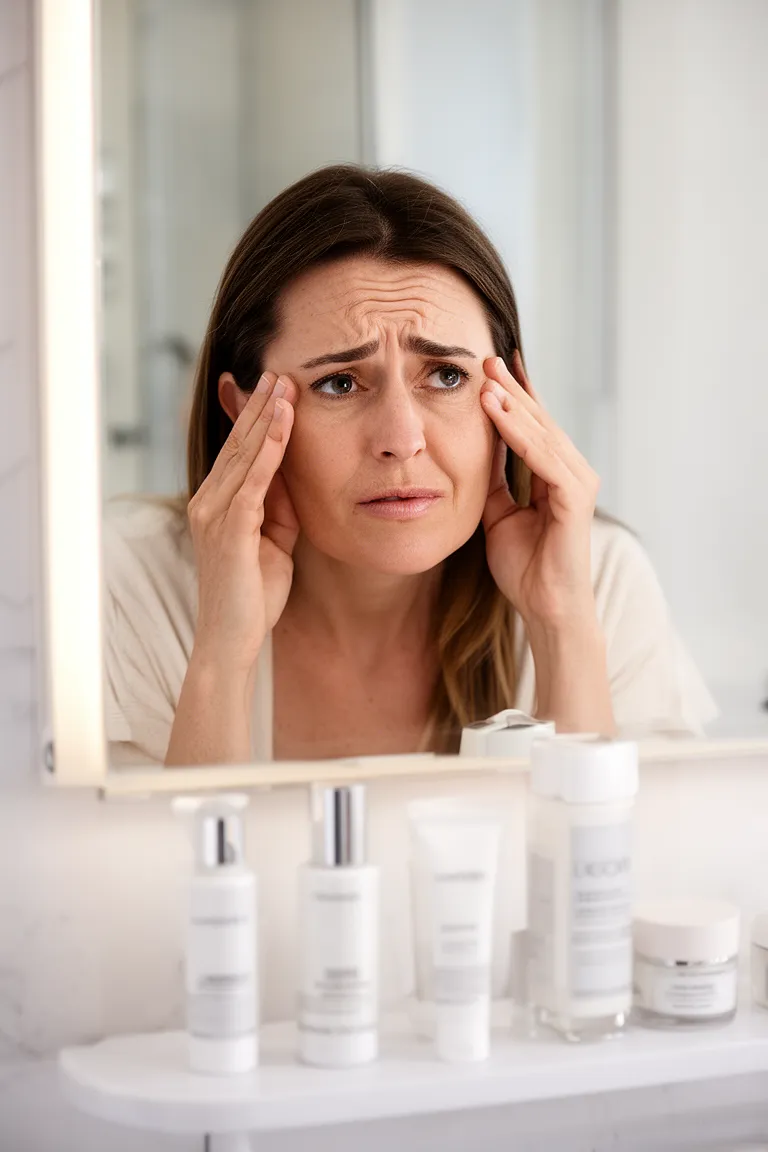
I used to look at my bathroom shelf with a real sense of pride. It was a carefully curated arsenal of serums, retinoids, and sunscreens—the result of years of research and a not-insignificant investment. I was the friend who could explain the difference between hyaluronic acid weights and the importance of pH in vitamin C. My skin, for the most part, reflected that dedication. So why, every single morning, did I lean into the mirror and feel a pang of frustration at the sight of those deep, etched lines fanning out from the corners of my eyes? They felt like a personal betrayal. I was doing everything right, and yet, they just seemed to get more pronounced, immune to my meticulous rituals. It was the quiet, lonely frustration of following all the rules and still losing the game.
I’d convinced myself that eye cream was the beauty industry’s cleverest marketing ploy—just glorified, overpriced moisturizer in a tiny jar. My potent facial serums and creams surely traveled the half-inch to my orbital bone, right? Adding another step felt like admitting defeat, like my perfect routine had a fundamental flaw. The seed of doubt was there, whispering the same question I saw echoed in countless beauty forums: why my eye wrinkles aren't going away despite good skincare? It was a question that carried the weight of wasted effort and mounting skepticism. That changed one rainy afternoon during my nightly ritual. I was meticulously applying my retinol serum, carefully avoiding my eye area as instructed, when it hit me. What if I was following the rules too well? What if, in my zeal to protect the delicate skin, I was systematically excluding it from the very ingredients that could help? That moment of questioning my own dogma was the beginning of a completely different journey—one that shifted my entire approach from skepticism to strategic understanding.
My Skincare Obsession: Why I Thought I Had All the Answers for My Eyes
My routine was a religion, and I was its most devout follower. Every night, without fail, I followed the same sacred steps: double cleanse, tone, a peptide serum for firming, a prescription retinoid (applied religiously, buffered on sensitive nights), a niacinamide booster for barrier support, and a rich, ceramide-packed moisturizer. Morning brought antioxidant protection with vitamin C, hydrating layers of hyaluronic acid, and SPF 50. I treated my skin like a precious canvas, investing not just money but time and obsessive attention. This diligence gave me a confidence that bordered on arrogance when it came to skincare advice. I believed general wisdom was for beginners; I was in the advanced class, and my smooth forehead and plump cheeks were my diplomas.
This confidence was real—and it created a massive blind spot, literally centered on my eyes. I’d look at my reflection and see the overall improvement, allowing it to overshadow the specific problem. I’d dismiss those deepening wrinkles as inevitable, a genetic lottery I’d lost, or just "expression lines" from a life well-lived. I told myself they gave me character. Yet, that narrative felt hollow, especially in the harsh light of my magnifying mirror. They weren't just fine lines; they were deep creases that seemed to anchor themselves deeper each year, like tiny trenches no amount of surface hydration could fill. The creeping doubt was subtle at first—a candid photo where the light caught them just so, a moment of noticing their depth in a department store mirror. I was the architect of my skincare, but this one area felt like it was built on a different, crumbling foundation, and my blueprints were useless there.
The Hard Truth: Why Even a 'Good' Routine Can Miss Deep Eye Wrinkles
When I finally decided to investigate instead of ignore, I learned my first hard lesson: the skin around our eyes isn't just more delicate; it's a different organ altogether. It's the thinnest skin on our entire body, about 0.5 mm thick compared to 2 mm on our cheeks. It has far fewer oil glands, which means its natural moisture barrier is inherently weaker. This fragile parchment loses hydration at a lightning pace and has a weaker structural support system of collagen and elastin fibers. My powerful facial retinoid? It was formulated for the robust, well-lubricated skin on my cheeks and forehead, not this fragile terrain. Even if I dared to bring it closer, the risk of irritation, redness, and debilitating dryness was high—a gamble I wasn't willing to take, and rightly so.
I also had to understand the crucial difference between dynamic and static wrinkles. The laugh lines from squinting at my computer or smiling at my kids were the dynamic ones, caused by muscle movement. But over decades, those repeated motions, coupled with that natural, age-related collagen and elastin breakdown, create permanent grooves—static wrinkles that just sit there, etched into the landscape, even when your face is at complete rest. My general anti-aging routine was a great background strategy for overall skin health, but it wasn't delivering a concentrated, safe, and targeted force directly to the site of these deep structural issues. Furthermore, I had blind spots in my diligence. I was stellar at applying sunscreen to my face every morning, but was I as diligent about reapplying right up to my lash line after lunch? Did my rich nighttime moisturizer, while excellent, truly have the specific peptide sequences and growth factors needed to signal for collagen repair in this uniquely thin skin? The answer was a humbling no. This was the core of my frustration and the key insight for anyone wondering, "can eye cream really help deep wrinkles if I already have a good skincare routine?" It’s not that your routine is bad; it’s that it’s not speaking the right language for that specific area.
It can be frustrating when you feel like you're doing everything right, only to see persistent concerns. If you're questioning if your current efforts are enough, exploring resources like am I wasting money on anti aging skincare products might offer some perspective.
Beyond Hydration: What I Learned Eye Creams Can Actually Do (and What They Can't)
Letting go of the "eye cream is a scam" mentality meant I had to get clear on its actual job description. This is where I moved from skeptic to informed consumer. I learned that while a good facial moisturizer hydrates, a targeted eye treatment is engineered for precision. It’s about sophisticated delivery systems—formulations designed to be effective at incredibly low concentrations of actives to avoid irritation, often using encapsulation technology to time-release ingredients like retinol gently. It’s about including molecules that not only plump with hydration but specifically signal for collagen production in an area that produces very little on its own.
For deep wrinkles, hydration, while crucial, is a temporary fix—like spritzing a wilted plant. It looks better for an hour, but it doesn't address the root. The real work comes from actives that go deeper. Gentle, encapsulated retinoids can accelerate cell turnover and boost collagen in a way that’s safe for the thin eye area. Peptides are the quiet workhorses, acting as tiny messengers that tell your skin to firm up and repair itself. Antioxidants like stabilized vitamin C or ferulic acid protect that paper-thin skin from daily environmental damage (like blue light and pollution) that silently breaks down collagen. And yes, superior humectants and emollients are vital to keep the barrier intact and prevent transepidermal water loss, which makes every wrinkle look more pronounced.
Crucially, I also learned what they can't do. No cream in a jar can replicate the dramatic lifting effect of a professional treatment like laser or filler. It can't erase decades of sun damage in a week. Its job is to improve, soften, strengthen, and prevent further deepening—to change the trajectory of your skin's aging in that zone. Managing these expectations was liberating; it allowed me to judge results on a realistic scale of improvement, not erasure. It answered the cynical question, "does eye cream work for deep wrinkles or is it a scam?" with nuance: it’s not a scam if you understand it’s a specialized tool, not a magic wand.
My 'Aha!' Moment: The Unexpected Ingredient Combination That Made a Difference
My journey from skepticism to visible results wasn't about finding one miracle product. It was about understanding synergy—how ingredients work together like a team. After diligent patch-testing, I cautiously introduced a gentle retinol eye cream every third night, slowly building up tolerance over a month. But the real 'aha!' moment, the one that transformed my experience with eye cream for stubborn wrinkles, came from pairing it strategically with a peptide-rich cream.
I used the peptide cream every morning and on the nights I wasn't using retinol. The peptides worked on reinforcing the skin's foundation, like adding supportive scaffolding, while the retinol (slowly, carefully) remodelled the structure itself. Using the peptide cream in the morning also provided a protective, nourishing base before my sunscreen, like a shield under armor. The application technique was another revelation: using my ring finger to gently pat, not drag, the product from the inner corner outward along the orbital bone. This ensured absorption without tugging on that fragile skin, which can actually worsen wrinkles over time.
I started to see changes not in days, but after a consistent 6-8 weeks of this paired approach. The deepest wrinkles didn't vanish—that wasn't the goal—but they became noticeably softer, less etched. The skin around them looked plumper, more resilient, and had a smoother texture. When I smiled, the creases were shallower. This proved that targeted, synergistic action could move the needle where my excellent but general routine had stalled.
Discovering the right combination of ingredients can feel like a breakthrough. For those exploring hydration's role, understanding does hydration really help get rid of fine lines around eyes or am I wasting money can be insightful.
Integrating Eye Cream: How I Finally Made It Work With My Existing Skincare Ritual
The practical hurdle was real. My routine was a finely tuned machine; where does this new, tiny component go without causing a breakdown? I developed a seamless integration method that felt intuitive, not disruptive. The golden rule I adhered to: lightest to heaviest consistency, and actives first for penetration.
In the morning, after my antioxidant vitamin C serum has absorbed and before my overall moisturizer, I gently pat on my peptide-based eye cream. This lets the active peptides sink in directly without being blocked by the heavier face cream I apply next. Then I follow with moisturizer and SPF, being careful not to disturb the eye area. At night, it's my second step: after my treatment serums (like my regular facial retinoid) and strictly before my facial moisturizer. I apply the eye cream first to the orbital area to ensure it's not diluted, swept away, or blocked by my heavier face creams. On the nights I use my gentle retinal eye cream, I skip any other actives (like acids or strong retinoids) in that immediate area entirely.
This order made it feel like a natural, essential part of the process, not a cumbersome add-on. It directly addressed the exact concern of someone searching for the best eye cream for deep wrinkles when you already use serums—it’s all about intelligent sequencing, not substitution. It turned the question "is it worth adding eye cream if I have a full skincare routine?" into a practical plan.
Scientific Evidence
Choosing Your Path: A Realistic Look at Approaches for Deep Eye Wrinkles
Through my trial, error, and research, I realized there isn't one right way, but there are different pathways depending on your starting point and goals. For those of us with established routines wondering what to do for deep eye wrinkles when nothing else works, it helps to see the options laid out. This table compares realistic approaches based on my journey and the conversations I've seen in communities of women over 40.
| Approach | Best For | Realistic Timeline for Visible Change | Key Consideration |
|---|---|---|---|
| Optimizing Your Existing Routine | Those hesitant to add new products; focuses on perfecting application, sunscreen reapplication, and hydration around eyes. | 12+ weeks for subtle improvement | May not be enough for established static wrinkles, but is a crucial foundational step for everyone. |
| Adding a Targeted Hydration+ Barrier Repair Eye Cream | If dryness and crepiness are the main concerns, but wrinkles are still superficial. | 4-8 weeks for improved texture and plumping | Great first step into eye care, but may not significantly impact deeper structural wrinkles alone. |
| Strategic Active Treatment (My Path) | Those with stubborn static wrinkles who already have a good base routine and are ready for targeted actives. | 8-12 weeks for softening of deep wrinkles | Requires patience, careful ingredient selection (like gentle retinoids + peptides), and consistent integration into your regimen. |
| Combining Topicals with Professional Treatments | When deep structural loss is significant; using eye cream to maintain and enhance results from procedures like lasers or fillers. | Varies (2-4 weeks to see topical support effects post-procedure) | Topical care is used as maintenance and enhancement, not as the primary solution. Requires professional consultation. |
When considering different skincare strategies, it's also helpful to look at the broader landscape of ingredient efficacy. For instance, understanding am I wasting money on collagen skincare products or do they really help can inform your choices.
The Mindset Shift: Redefining What "Working" Looks Like
The final, and perhaps most important, part of my journey was redefining success. I had to let go of the fantasy of erasure I saw in filtered ads and embrace the reality of meaningful improvement. My deep wrinkles are part of my story—proof of laughter, concentration, and life—but now they look like they're written in a finer pen, not carved in stone. The skin around my eyes is brighter, tighter, and doesn't crease as deeply when I smile. The shadow they cast is lighter. This process taught me that even the most diligent among us can have blind spots. Skincare isn't about achieving a perfect, static routine etched in granite; it's about adapting to your skin's evolving geography, listening to its specific needs zone by zone. It’s about being a smart strategist, not just a diligent follower.
The Long Game: Maintenance, Patience, and Knowing Your Limits
I now view my eye cream as non-negotiable as my sunscreen—a permanent, dedicated lieutenant for this vulnerable front. The results are maintained through unwavering consistency, not occasional use. I’ve also made peace with the fact that for some level of structural loss, topical care has its limits, and there's no shame in eventually considering a professional consult. But for now, my targeted, synergistic approach has given me significant improvement and a profound sense of control. It solved the riddle I faced for years. The journey validated my initial efforts while compassionately showing me where to refine them. It wasn't that my routine was bad; it just needed a specialized tool for its most delicate task.
Frequently Asked Questions
Q: How long does it really take to see results from an eye cream for deep wrinkles? A: You need to arm yourself with patience. Unlike a hydrating cream that can plump lines temporarily in minutes, actives that target collagen and elastin work on a cellular cycle. I noticed a subtle improvement in skin texture and a "brighter" look after about 4 weeks. But for a visible softening of my deeper, static wrinkles, it was a solid 8-12 weeks of daily, consistent use before I felt confident the change was real and not just wishful thinking.
Q: I already use a retinol serum on my face. Do I really need a separate retinol eye cream? Can't I just use my face serum there? A: This was my biggest mental hurdle. The answer is likely yes, you need a separate one, for both safety and efficacy. Facial retinoids are often too strong and potentially irritating for the thin, less-oily eye area. Using them there can lead to severe dryness, redness, irritation, or even damage the fragile moisture barrier, making wrinkles look worse. A dedicated eye cream will contain a much lower, gentler concentration (often in a time-release or encapsulated form) and be formulated with more soothing, barrier-supporting ingredients to be effective without the harsh side effects.
Q: What should I look for in an eye cream for deep wrinkles if I have mature skin and already use anti-aging products? A: Look for products that are formulated to go beyond basic hydration. Prioritize formulas that contain a combination of proven actives: gentle retinoids (like retinaldehyde or encapsulated retinol), collagen-stimulating peptides (like Matrixyl or Argireline), and potent antioxidants (like stabilized vitamin C or ferulic acid). For mature skin, texture is also key—it should be rich enough to nourish and prevent moisture loss but not so heavy or occlusive that it causes milia. Always avoid added fragrances, which can be sensitizing.
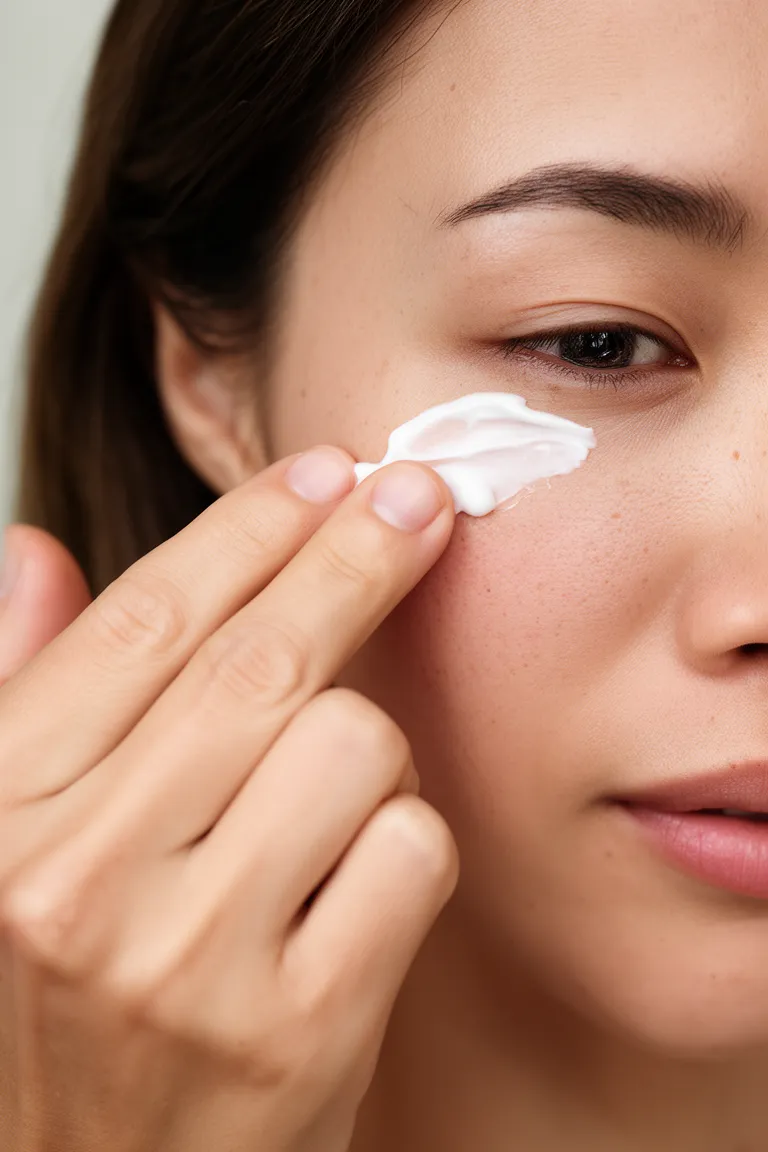
Q: Where exactly should I apply eye cream, and what's the best technique to avoid tugging? A: Apply a small amount (about half a pea-size for both eyes) to the orbital bone area. Gently pat from the inner corner outwards towards the temples, and lightly onto the brow bone. Avoid the immediate mobile eyelid and the lash line (to prevent migration into the eye) unless the product is specifically ophthalmologist-tested for that use. Always use your ring finger—it naturally applies the least pressure—and pat until absorbed. Never drag, rub, or pull the skin.
Q: Can I use the same eye cream for morning and night? A: You absolutely can, especially if you find one that's a great all-rounder. However, optimizing can yield better results. I prefer a peptide and antioxidant-rich cream for daytime to protect, firm, and defend against environmental damage. At night, when the skin's repair cycle is most active, I use a treatment-focused cream with gentle retinoids or other reparative actives. If you choose just one, a potent treatment cream used nightly will likely give you the most significant benefits over time.
📌 Love this guide? Save it on Pinterest!
Pin Eye Cream for Deep Wrinkles 2026: My Honest Journey & Results to your board so you can come back to it later.


Comments
Post a Comment