
How I’m Learning to Restore Skin Elasticity After 40 When Sunscreen, Exercise, and Healthy Eating Still Aren’t Enough
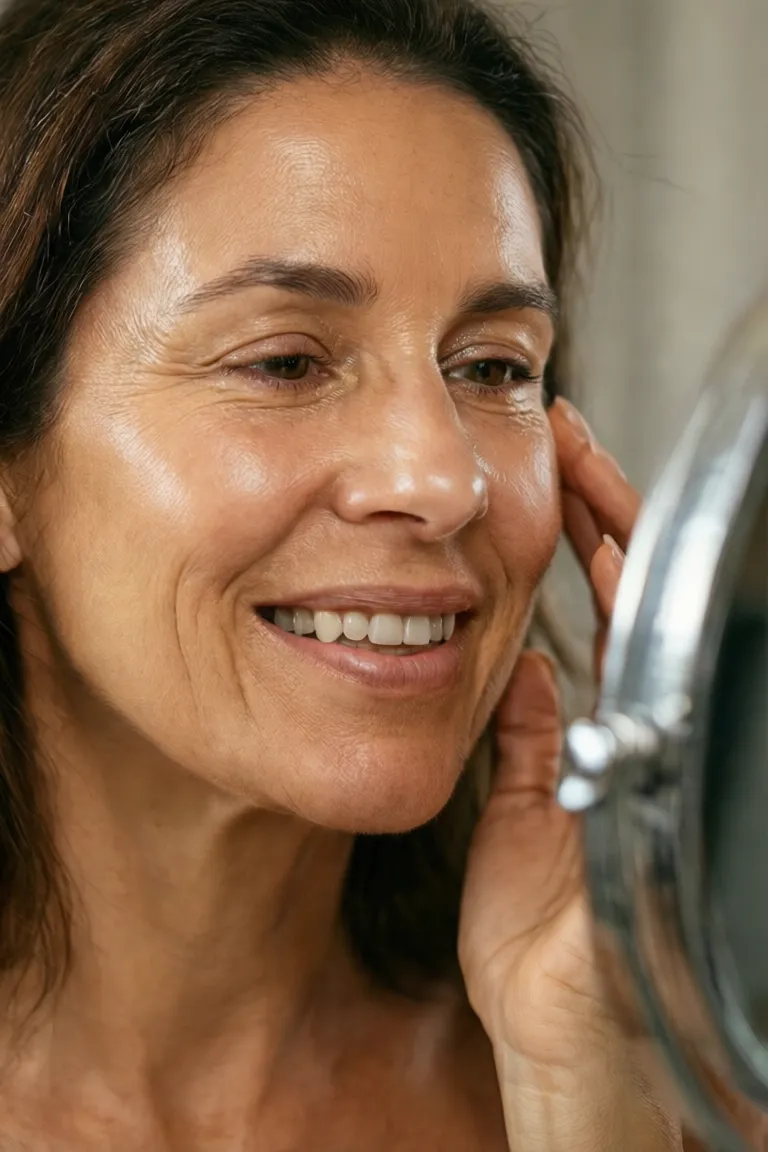
I was pulling on a turtleneck sweater last fall, the kind I’ve worn for years, when I caught my reflection in the mirror. Not my face—my neck. The fabric hugged a line of skin that didn’t snap back the way it used to. It just… lingered. I stood there, a 47-year-old woman who religiously applies SPF 50, who meal-preps salmon and kale, who has a Peloton badge for a 60-day streak, and I felt a hot wave of pure frustration. I’d done the homework. I’d followed the rules. So why was my skin losing elasticity after 40 despite using sunscreen and living what felt like a textbook “healthy” life?
That moment was my wake-up call. I’d been noticing a general lack of firmness for a while—a slower rebound when I pressed my cheek, a softer jawline—but I’d chalked it up to a bad night’s sleep or needing more water. I’d invested in luxury firming creams, slathered on hyaluronic acid serums, and told myself I was doing enough. But in that mirror, the truth was undeniable: my disciplined prevention game was strong, but it wasn’t reversing the changes already in motion. I wasn’t looking for a time machine, just a bit of the resilience I’d lost. This is my experience improving skin elasticity after 40, and the honest, sometimes frustrating, path I’m on.
The Moment I Realized My Healthy Routine Wasn’t Restoring Firmness
My frustration stemmed from a fundamental misunderstanding I think many of us share. I believed that because I was protecting my skin from new damage, I was also actively repairing the old. Sunscreen prevents future photoaging, exercise boosts circulation, and leafy greens provide antioxidants—all crucial, all beneficial. But they are primarily defensive strategies. The realization that hit me was this: preventing a house from getting more weather damage is not the same as rebuilding its aging foundation. My collagen and elastin, the very scaffolding of my skin, had been quietly diminishing for decades, a natural process accelerated by all those years of teenage tanning (despite my current saintly SPF habits). The subtle sagging and loss of snap-back weren’t a sign I was failing; they were signs of a structural shift that prevention alone couldn’t address.
What I wish I’d understood earlier is that healthy habits can prevent damage without reversing existing laxity. They’re the maintenance crew that keeps the roof from leaking further, but they aren’t the construction team that can replace the load-bearing beams. This was the emotional pivot for me—letting go of the guilt that I wasn’t doing “enough” and accepting that I needed a different kind of strategy entirely.
What Actually Changes Skin Elasticity After 40
To figure out how to move forward, I had to understand what I was actually dealing with. I dove into the biology, translating the science into plain English. Collagen is the sturdy mattress padding of our skin, providing volume and plumpness. Elastin is the springy coil inside, allowing skin to stretch and recoil. Starting in our mid-20s, we produce less of both each year. After 40, this decline accelerates, and past sun exposure literally chops up the remaining collagen fibers through a process called photoaging. Add in the hormonal shifts of perimenopause, which can thin the skin and further dry it out, and you have a perfect storm for laxity. Functional integrity of aging skin, from cutaneous biology to anti-aging...
This was the key insight: while my healthy habits were slowing down the rate of this breakdown, they weren’t significantly signaling my skin to build massive amounts of new scaffolding. Drinking water hydrates the surface cells (which is vital for a healthy glow), but it doesn’t penetrate deep into the dermis to rebuild elastin. Eating broccoli fights free radicals, but it doesn’t directly instruct fibroblasts to pump out new collagen. I needed a targeted offensive plan, not just a better defense.
The Supporting Cast: Nutrition, Sleep, and Movement
This isn’t to say my lifestyle didn’t matter—it absolutely did, just in a supporting role. I started viewing my nutrition as the high-quality building materials for the repair work. My sleep became the non-negotiable shift when that repair actually happens. And my exercise? It was the delivery system, boosting circulation to carry nutrients to my skin. They set the stage, but they weren’t the main actors for rebuilding.
Why My Firming Creams Barely Made a Difference
Armed with this new understanding, my past disappointment made painful sense. I’d been buying expensive “lifting” creams expecting structural change, but most were delivering cosmetic, temporary effects. They were brilliant at moisturization and plumping—often with humectants like hyaluronic acid that draw water into the top layer of skin, making lines look softer for a few hours. But once the water evaporated, my skin returned to its baseline. I was essentially hydrating a wrinkle, not rebuilding the support beneath it. This is why I felt I was wasting money on skin firming creams after 40. They weren’t useless, but they were addressing a different problem (surface dehydration) than the one causing my main concern (dermal laxity).
This doesn’t mean all topicals are futile. It means we have to choose them for the right job. A good moisturizer is non-negotiable for barrier health, which is the foundation for everything else. But for actually influencing collagen, I learned to look for actives with a proven track record of penetrating deeper and communicating with skin cells. This realization redirected my entire approach. my experience with collagen creams and serums for fine lines
Temporary Plumping Versus Structural Tightening
The biggest lesson was learning to spot the difference. A product that makes my skin feel instantly tighter? That’s often a film-forming agent or a hydration boost—a lovely, temporary fix. A product that might actually improve elasticity over months? That’s something like a retinoid or a peptide, which works quietly and without immediate fanfare. I had to unlearn my desire for instant gratification and learn to trust the slow, unseen process.
The Shift: From Miracle Hunting to a Multi-Layer Strategy
I stopped shopping for products with the vaguest promises and started architecting a strategy. My new mantra became: defend, communicate, rebuild, and support. I realized that trying to restore skin elasticity after 40 isn't a single-action mission; it's a layered approach where each layer has a specific, realistic job to do. To make sense of the options, I had to map them out for myself.
| Approach | Primary Goal | Realistic Timeline for Noticeable Change | My Key Takeaway |
|---|---|---|---|
| The Foundation (SPF, Diet, Sleep) | Prevent new damage & support overall skin health | Ongoing benefit, but not a reversal | Essential, but insufficient alone for repairing existing laxity. |
| Targeted Topicals (Retinoids, Peptides) | Stimulate collagen production & improve skin texture | 3-6 months of unwavering consistency | This is where real change begins, but patience is non-negotiable. |
| Professional Treatments (e.g., RF Microneedling) | Create controlled, deeper dermal remodeling | Often 1-3 sessions, with results developing over 2-6 months | For concerns topical creams can't reach; requires investment and professional guidance. |
| Surgical Options | Address significant, structural sagging | Immediate, with final results after healing | A different category entirely for major laxity; not a substitute for skin care. |
Seeing it laid out like this was liberating. It helped me understand why my jar of expensive cream felt like a letdown—I was asking a "Foundation" or mild "Targeted Topical" to do a "Professional Treatment" job. It also showed me where to focus my energy and budget next.
The Routine I Built Around SPF, Retinoids, and Skin Recovery
Building a sustainable routine was less about adding steps and more about strategic consistency and listening to my skin. My morning routine is fast and defensive: a vitamin C serum (an antioxidant to boost my sunscreen’s protection and brighten), a simple moisturizer, and my holy-grail SPF 50. I apply it to my face, neck, chest, and hands—every single day, no exceptions. This is my non-negotiable shield.
The real work happens at night. After a gentle cleanse, I follow a rotating schedule that I call my "listen and respond" method. Two nights a week, I use a gentle retinol. I apply a pea-sized amount to dry skin, followed by a calming moisturizer. The next night is for recovery—just a peptide serum and a richer, barrier-supportive moisturizer to soothe and rebuild. Then I repeat. On the seventh night, I give my skin a complete break with only a basic moisturizer. This rhythm was a game-changer. It allowed my skin to benefit from the collagen-stimulating effects of the retinoid without becoming red, irritated, and compromised. I learned that damaging your moisture barrier in pursuit of anti-aging is a classic two-steps-back mistake.
Introducing Actives Without the Aftermath
When I first tried retinol years ago, I used it nightly and wound up with red, peeling skin that looked and felt worse. This time, I introduced it like I was getting to know a new friend—slowly and with respect. I started with once every five days. If my skin felt calm, I gradually shortened the gap. The peptides were my gentle ally on the off nights, continuing the "repair" signal without the intensity. I also doubled down on the supporting actors: a silk pillowcase to reduce friction, a humidifier in my bedroom during dry months, and a conscious effort to sleep on my back. I now view my nutrition and exercise as the essential fuel for this repair work, not the sole solution. how long does it take to see results from firming skin treatment for women over 40
Scientific Evidence
The Realistic Timeline: Learning Patience I Never Knew I Had
One of the hardest lessons was managing my expectations. After a month on my new routine, I scrutinized my face for dramatic change and felt deflated. I had to remind myself that skin regenerates on a cycle of about 28 days, and rebuilding collagen is a slow, cellular process. When you’re trying to improve skin elasticity after 40, you’re not treating a surface stain; you’re renovating a foundation.
Most dermatologists and research suggest it takes a minimum of three to six months of consistent retinoid use to see measurable improvements in firmness and fine lines. The first changes are often in texture and radiance—my skin started looking smoother and more even-toned around the 8-week mark. I held onto that small win. The true test came at six months, when that turtleneck moment revisited me. The skin on my neck didn’t look 30 again, but it looked better. It had more bounce, a tighter appearance. The improvement was subtle but real. It wasn’t a miracle, but it was meaningful progress. It taught me that the question "how long does it take to improve skin elasticity after 40" has one answer: longer than you want it to.
When Home Care Wasn’t Enough—and What I Considered Next
Even with this progress, there are areas—like the very slight droop at the corners of my jaw—that my topicals weren’t touching. And that’s okay. It led me to the final, crucial piece of my education: understanding the hierarchy of results. Topical skincare is excellent for overall skin health, texture, and mild-to-moderate improvement. But for more significant laxity, you’re asking it to perform a task it may not be engineered for.
This is when I started researching professional treatments for skin elasticity after 40 when skincare fails. I booked a consultation with a board-certified dermatologist, not to schedule anything immediately, but to learn. She explained options like radiofrequency microneedling, which combines micro-injuries (triggering collagen repair) with radiofrequency heat (tightening existing collagen), or non-invasive ultrasound treatments. These procedures work from the inside out, creating a more controlled and significant wound-healing response than any cream ever could. They have downtime, cost, and require multiple sessions, but they exist in a different results category. Knowing this spectrum exists was empowering, not discouraging. It gave me a realistic roadmap and finally eased the pressure I’d put on myself—and my wallet—to find a cream that could do the impossible. how to restore skin elasticity after 40
Setting Expectations for the Professional Path
My dermatologist was refreshingly honest. She explained that while these treatments can produce noticeable firming, they cannot match surgical lifting for substantial laxity. We talked about realistic benefits, the importance of multiple sessions, and how my skin tone might respond. She gave me a list of questions to ask any provider: about their experience, the technology they use, the expected number of treatments, and the true total cost. It turned my anxiety into a plan.
Embracing the Journey, Not Just the Destination
Today, my goal has shifted from “restoring” my 30-year-old skin to “optimizing” the skin I have now. The journey to improve skin elasticity after 40 is a marathon with many different types of terrain. Sunscreen, diet, and exercise are the paved road—essential for the trip. Retinoids and targeted actives are the uphill climbs that build real strength. And professional treatments are the specialized gear for the steepest parts of the trail.
I’m no longer frustrated at the mirror. I’m curious and proactive. I’ve made peace with the fact that this is a multi-pronged effort, and that doing “everything right” sometimes means knowing when to call in the experts. My skin is healthier, more resilient, and yes, firmer than it was a year ago. The quest to restore skin elasticity after 40, I’ve learned, isn’t about finding one magic solution. It’s about building a smart, layered strategy that honors both the biology of aging and the reality of a life well-lived—a life that shows, beautifully, on my face.
Frequently Asked Questions

Q: How long does it take to see real improvement in skin elasticity with a new routine? A: You need to practice serious patience. While hydration can make skin look plumper in days, true improvements in firmness and elasticity from ingredients like retinoids or peptides require consistent use for a minimum of three to six months. Skin cell turnover and collagen remodeling are slow processes. I didn’t see the subtle but meaningful changes in bounce and tightness until I hit the six-month mark of unwavering consistency.
Q: Does retinol really restore skin elasticity after 40, or is it just for wrinkles? A: Retinol’s most famous benefit is reducing fine lines, but its mechanism of action is precisely what helps elasticity. By accelerating cell turnover and, most importantly, stimulating fibroblasts to produce new collagen and elastin in the dermis, it directly addresses the structural loss that causes laxity. It’s one of the most proven topical ingredients for this concern, which is why it became the cornerstone of my routine.
Q: I have sensitive skin. Are there alternatives to retinol for elasticity? A: Absolutely. This was a major concern for me too. Bakuchiol is a plant-derived alternative that studies show can offer similar collagen-supporting benefits to retinol with far less irritation for many people. Peptide serums are also an excellent, gentle option as they work by signaling your skin to produce more collagen. You can look for products with growth factors or niacinamide, which support barrier health and collagen production. Always patch test and introduce one new product at a time, starting slowly.
Q: What should I look for in professional treatments if I decide to go that route? A: First, always consult a board-certified dermatologist or a highly experienced, licensed medical aesthetician. Be wary of trendy gadgets and look for established technologies with robust clinical data, like radiofrequency microneedling or microfocused ultrasound. Ask about the practitioner’s experience with your specific skin tone and concern, the expected number of sessions, the real cost, and the downtime. A good provider will set realistic expectations and not promise surgical-level results from non-invasive procedures.
Q: Is taking a collagen supplement helpful, or is it a waste of money? A: The science on oral collagen peptides is promising but still evolving. Some high-quality studies show they can increase skin hydration, elasticity, and collagen density by providing the building blocks and signaling the body to produce more. However, it’s not a magic pill. Think of it as a supportive supplement to a solid topical and lifestyle routine, not a replacement. If you try one, look for hydrolyzed collagen peptides (for absorption) and commit to taking it daily for at least 8-12 weeks to assess any effect.
Q: Am I wasting money on skin firming creams after 40? A: It depends on what you expect from them. If you expect a cream to significantly lift sagging skin or rebuild deep structure, you might be disappointed. But if you’re looking for a good moisturizer that plumps the surface with hydration, improves texture, and supports your skin barrier—which is vital for everything else to work—then a well-formulated cream is not a waste. The key is to know its job: it's a supportive player, not the star of the show for restoring lost elasticity.
📌 Love this guide? Save it on Pinterest!
Pin Restore Skin Elasticity After 40: My Honest Journey in 2026 to your board so you can come back to it later.


Comments
Post a Comment