
How I Learned to Restore Skin Elasticity After 40 When My Healthy Routine Still Wasn’t Working
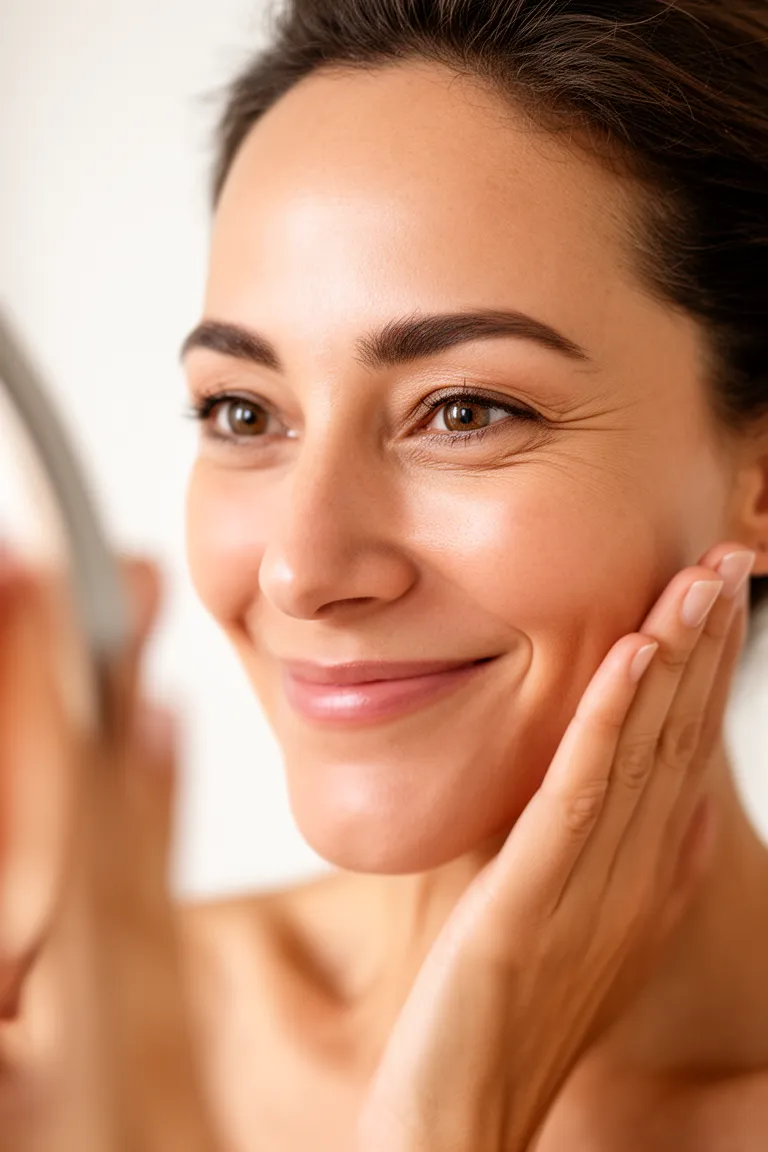
I did everything right. I drank my green smoothies, logged my miles, prioritized my eight hours, and was religious with my SPF 50. At 47, I felt strong, healthy, and in control. So, when I leaned into the mirror one morning, pulling gently at my cheek and watching the skin take a slow, lazy moment to settle back, I didn’t feel pride. I felt a deep, quiet sense of betrayal. My skin looked… loose. Less like my skin, and more like a slightly too-big shirt. I had followed the script for “aging gracefully,” yet here I was, facing a reflection that told a different story. It was the frustrating gap between effort and outcome that so many of us hit, the silent question: What more am I supposed to do?
My frustration curdled into action. I marched into the skincare aisle, armed with hope and a credit card, drawn to jars that promised “lifting,” “firming,” and “restored elasticity.” I’d smooth on these rich creams, feel a temporary tightness or a dewy glow, and think, This is it! But by noon, that sensation had faded, and my skin in the mirror was unchanged. I was chasing a feeling, not a result. I felt foolish, like I was wasting money on creams for sagging skin after 40, buying into a promise that my reflection refused to keep.
It was that cycle of hope and disappointment that finally made me step back. I realized I wasn’t just battling gravity or time; I was battling my own misunderstanding of what skincare could and couldn’t do after 40. My journey to restore skin elasticity after 40 wasn’t about finding a single miracle. It was about rebuilding a foundation I didn’t even know I’d lost.
The Morning I Realized My Skin Elasticity Had Changed
It wasn't a wrinkle that caught my eye. It was the texture. The skin along my jawline seemed less defined, like the underlying scaffolding had softened. When I smiled, the bounce-back was slower. This is what people mean by "skin elasticity"—that snap-back resilience that comes from healthy collagen and elastin fibers. After 40, the natural decline in these proteins, accelerated by decades of sun exposure (even with sunscreen, because life happens), and the hormonal shifts of perimenopause, team up to quietly remodel your face. It’s not sudden; it’s a slow retreat you one day notice has moved the front line. I had to accept that my healthy lifestyle, while crucial for my whole body, was merely a supporting actor for my skin’s structural drama. The lead roles—collagen production, elastin integrity—needed a different kind of direction.
I remember a specific Tuesday. I was getting ready for a video call, and the harsh ring light showed every undulation, every area where my skin seemed to have lost its will to stay put. It didn’t look tired; it looked resigned. That’s when I understood that skin elasticity after 40 even though I eat healthy and exercise is a separate conversation. You can be fit and still have skin that’s decided to retire early. The realization wasn’t about blame; it was about redirecting my effort. My body felt 35, but my skin was telling its own, more complicated story.
Why My Firming Creams Did Almost Nothing
Here’s the hard truth I had to learn: most firming creams are brilliant moisturizers. They plump up the very top layer of your skin with humectants, which can make lines look softer and skin feel tighter for a few hours. That’s the “instant result” they sell. But topical collagen and firming creams cannot lift loose skin. The collagen molecules are too large to penetrate deeply where they’re needed. I was hydrating the roof while the foundation was quietly eroding. I was asking a moisturizer to do a structural engineer’s job.
This doesn’t mean those creams are useless—hydration is non-negotiable for skin health—but I had to realign my expectations. They were maintenance, not renovation. The temporary tightness I felt was often from film-forming ingredients that created a literal, physical pull on the surface. Once I washed my face, that “lift” was gone. It was a costume, not a cure. This was the core of my disillusionment and the answer to the question, “why isn't my firming cream working after 40?” I was treating a symptom (dryness, temporary laxity) but missing the cause (compromised collagen and a weakened skin barrier).
Temporary Moisturization Versus Structural Collagen Change
Think of your skin like a mattress. A good moisturizer is like plumping up the pillow-top—it feels better, looks smoother. But if the inner springs (your collagen and elastin) are worn out, no amount of plumping will fix the sag in the middle. My creams were great pillow-tops. My springs needed reinforcement.
What Evidence Says About Oral Collagen Supplements
In my desperation, I also turned to powders and pills. Does collagen help with skin elasticity after 40? The science is evolving. Some research suggests hydrolyzed collagen peptides can signal your body to produce more of its own collagen. In my experience restoring skin elasticity after 40, I noticed my skin seemed more hydrated and maybe a bit plumper when I was consistent with a high-quality supplement. But it was subtle, a background player. It wasn’t the solo act that reversed the sagging. It was one piece of a much larger puzzle, and it certainly can’t compete with the damage from skipping sunscreen. [Functional integrity of aging skin, from cutaneous biology to anti-aging...
The Missing Piece I’d Completely Overlooked: Barrier-Supportive Hydration
Before I could even think about rebuilding, I had to stop the leak. My quest for firmer skin had me using potent actives, but I’d neglected my skin barrier—the protective outer layer. When it’s compromised (from over-cleansing, weather, or just age), water escapes easily, leaving skin dry, irritable, and unable to benefit from any good ingredients I put on it. My skin was like a cracked vase; I was pouring in expensive water, but it was just leaking out.
I swapped my foaming cleanser for a creamy, non-stripping one and became obsessed with ingredients like ceramides, fatty acids, and niacinamide. This wasn’t about a fleeting dewy look; it was about creating a fortified, hydrated canvas. For the first time in years, my skin stopped feeling like it was just barely holding on. It felt calm, supple, and strong. This step, often glossed over in favor of sexier “anti-aging” actives, was the pivotal turn in what to do when collagen skincare products aren’t working on my face. You can’t build a skyscraper on a swamp. Barrier repair is about giving your skin solid ground.
The Retinoid Revelation: Patience, Not Panic
I’d been afraid of retinoids, convinced they’d leave me red and peeling for weeks. But every dermatological source pointed to them as the gold standard for encouraging collagen production at a cellular level. The key, I discovered, was a glacial introduction. I started with a low-dose retinol, using it just one night a week, literally sandwiched between layers of my barrier-supportive moisturizer.
Yes, I had some flaking around my chin and nose. But by listening to my skin and slowing down—sometimes taking two nights off between uses—I avoided the dreaded “retinoid uglies.” After three months of this patient, gradual increase, I noticed my skin texture was undeniably smoother, finer lines were less apparent, and it had a new overall density. It wasn’t “tight,” but it felt thicker, more substantial. Does retinol help restore skin elasticity after 40? In my experience, yes—but not as a quick fix. It’s a long-term investment in your skin’s cellular machinery, convincing it to behave a bit more youthfully. It’s the closest thing to a “reset button” I’ve found in a bottle.
Building The Routine That Finally Made Sense After 40
The magic wasn’t in one product, but in the symphony. My new routine was built on consistency, not complexity. It became a quiet, non-negotiable part of my day, like brushing my teeth.
Morning: A splash of water or a gentle cleanse, a vitamin C serum (a protective antioxidant to mop up daily damage), a rich moisturizer packed with ceramides, and my non-negotiable broad-spectrum SPF 50. The sunscreen wasn’t just for beach days; it was the single most important step to prevent further collagen breakdown.
Evening: A double cleanse to thoroughly remove sunscreen (first an oil-based balm, then a gentle cream), the same rich moisturizer on damp skin, and my retinoid (now up to three nights a week, still sandwiched).
I stopped using physical scrubs and harsh acids. I simplified. This best routine to restore skin elasticity after 40 focused on protection by day, repair by night, and hydration always. It was boring. And it worked.
Scientific Evidence
What Improvement Actually Looked Like—and How Long It Took
This is where I want to be brutally honest, because the internet is full of lies. I did not look 35 again. My jawline did not become razor-sharp. The transformation was quiet, a series of small victories that added up to a significant shift in how my skin felt and looked.
Month 1: My skin was just more comfortable. The constant tight, dry feeling was gone. It had a healthier glow from better hydration. Month 3: Texture was visibly improved—smoother, more even. The fine lines around my eyes seemed softer, less etched. This was the retinoid starting its work. Month 6: This was the milestone. The subtle firmness, that feeling of “bounce” when I pressed my cheek, started to become noticeable. My skin didn’t hang the same way. It looked more supported, like it had a bit more internal structure. This, I believe, was the collagen response.
How long does it take to improve skin elasticity after 40? For genuine, collagen-related change, you must think in seasons, not weeks. The improvement is subtle, cumulative, and real. It’s the difference between your skin looking tired and defeated versus looking healthy, strong, and cared for its age. That is a profound difference. I learned to measure progress not by the absence of lines, but by the presence of health.
| Approach | Best For | Realistic Timeline for Visible Change | Key Consideration |
|---|---|---|---|
| Hydration & SPF Focus | Starting simple, sensitive skin, or repairing a damaged barrier | 4-8 weeks for improved comfort and glow | Essential foundation, but won't significantly rebuild collagen on its own. |
| Hydration + Gentle Retinoid | Those ready to commit to collagen support with a cautious, gradual method | 3-4 months for texture; 6+ months for firmness | Patience is non-negotiable. The "slow and steady" path yields sustainable results. |
| Comprehensive Topical Routine (Antioxidants, Retinoid, Barrier Support) | Individuals frustrated by past failures, wanting to address all angles of skin health | 2-3 months for overall quality; 8-12 months for cumulative elasticity benefits | Requires daily consistency. This is the core of how I improved loose skin after 40 with skincare. |
| Topical Routine + Professional Treatments | Addressing more pronounced laxity where skincare alone has reached its limit | Varies by treatment; results are incremental and require multiple sessions | An investment in both time and money. Skincare remains crucial to maintain and enhance results. |
When Skincare Wasn’t Enough for My Sagging Skin
Even with all this, there was a fold of skin on my upper eyelid that no cream would ever lift. Accepting the limits of topical skincare was as important as understanding its power. For true, gravity-driven laxity, skincare is like excellent fitness and nutrition—it gives you the best possible version of yourself, but it can’t change your fundamental bone structure or reposition significant volume loss.
I finally consulted a board-certified dermatologist. We talked about options like radiofrequency microneedling for my lower face and gentle laser treatments for overall texture. She was candid: these procedures offer modest, incremental improvement, not a facelift. They are a complement to, not a replacement for, a solid skincare regimen. They work with the collagen-building I was already doing, potentially amplifying it. This consultation didn’t diminish my routine’s value; it put it in a realistic context. It answered the question, “can you really tighten loose skin after 40 without surgery?” for my specific case: yes, but only to a point, and the definition of “tighten” is subtle.
When to Consult a Professional
If you have significant, sudden laxity, or if the feeling of skin "dragging" affects you deeply, a consultation is a smart step. It’s not about admitting defeat with skincare; it’s about gathering all the information for your unique face. A good provider will assess your skin quality, discuss your routine, and help you set achievable expectations, whether you proceed with a treatment or not.
The Mindset Shift That Changed Everything
The greatest restoration wasn’t just in my skin—it was in my perspective. I stopped chasing a past version of my face and started nourishing the one I have. I learned that restoring skin elasticity after 40 naturally is a misnomer if you think it means turning back the clock. It’s about optimizing your skin’s current health, supporting its biology, and finding beauty in resilience.
My skin today is the strongest, healthiest, and most luminous it’s been in a decade. It has lines, and yes, it’s softer than it was at 30. But it looks cared for. It looks alive. It looks like me. The frantic search for a miracle cream was replaced by a quiet confidence in a simple, supportive routine. That, I’ve learned, is the only result worth working for.
Frequently Asked Questions

Q: How long does it really take to see results from a new routine focused on elasticity? A: Manage your expectations from the start. You might see better hydration and a "glow" within 4-6 weeks. Improvements in fine lines and texture can take 3-4 months of consistent retinoid use. For any measurable change in firmness or elasticity related to collagen rebuilding, you need to commit to a minimum of 6 months, often more like 9-12 months, of unwavering routine. This is a marathon, not a sprint.
Q: I eat well and take collagen supplements. Do they help, or am I wasting my money? A: This is a hot topic. The evidence on oral collagen supplements is promising but not yet definitive. Some studies show they can improve skin hydration and elasticity by providing the building blocks for collagen production. In my journey, I think they helped as a supportive player, especially with hydration. But they will never override sun damage or replace a topical retinoid. If you choose to try them, look for hydrolyzed collagen peptides from a reputable source and pair them with vitamin C for synthesis. Think of them as a potential helper, not the hero.
Q: My skin is sensitive and reactive. Can I still use retinoids? A: Absolutely, but with extreme caution and a "less is more" philosophy. Start with the lowest concentration available (often 0.25% retinol or a gentler retinoid alternative). Always use the "sandwich method": apply moisturizer first, then your retinoid, then another layer of moisturizer. Begin with one night per week for a full month, then slowly increase only if your skin shows no signs of irritation (redness, stinging, raw patches). The goal is slow, gentle encouragement, not aggression. If your skin protests, listen to it and take a break.
Q: Is it possible to tighten loose skin after 40 without any procedures? A: This depends entirely on the degree of laxity and your definition of "tighten." Skincare can significantly improve skin quality, thickness, and mild firmness, giving the appearance of tighter, more supported skin. However, it cannot physically lift or remove significant sagging caused by lost volume and structural support. For that, energy-based treatments (like ultrasound or radiofrequency) or surgery are the only options. A good, consistent routine maximizes what’s possible topically and sets you up for better, longer-lasting results if you ever choose to explore a procedure.
why my anti aging skincare routine isn’t working
📌 Love this guide? Save it on Pinterest!
Pin Restore Skin Elasticity After 40: My Honest Journey & What Actually Works 2026 to your board so you can come back to it later.


Comments
Post a Comment